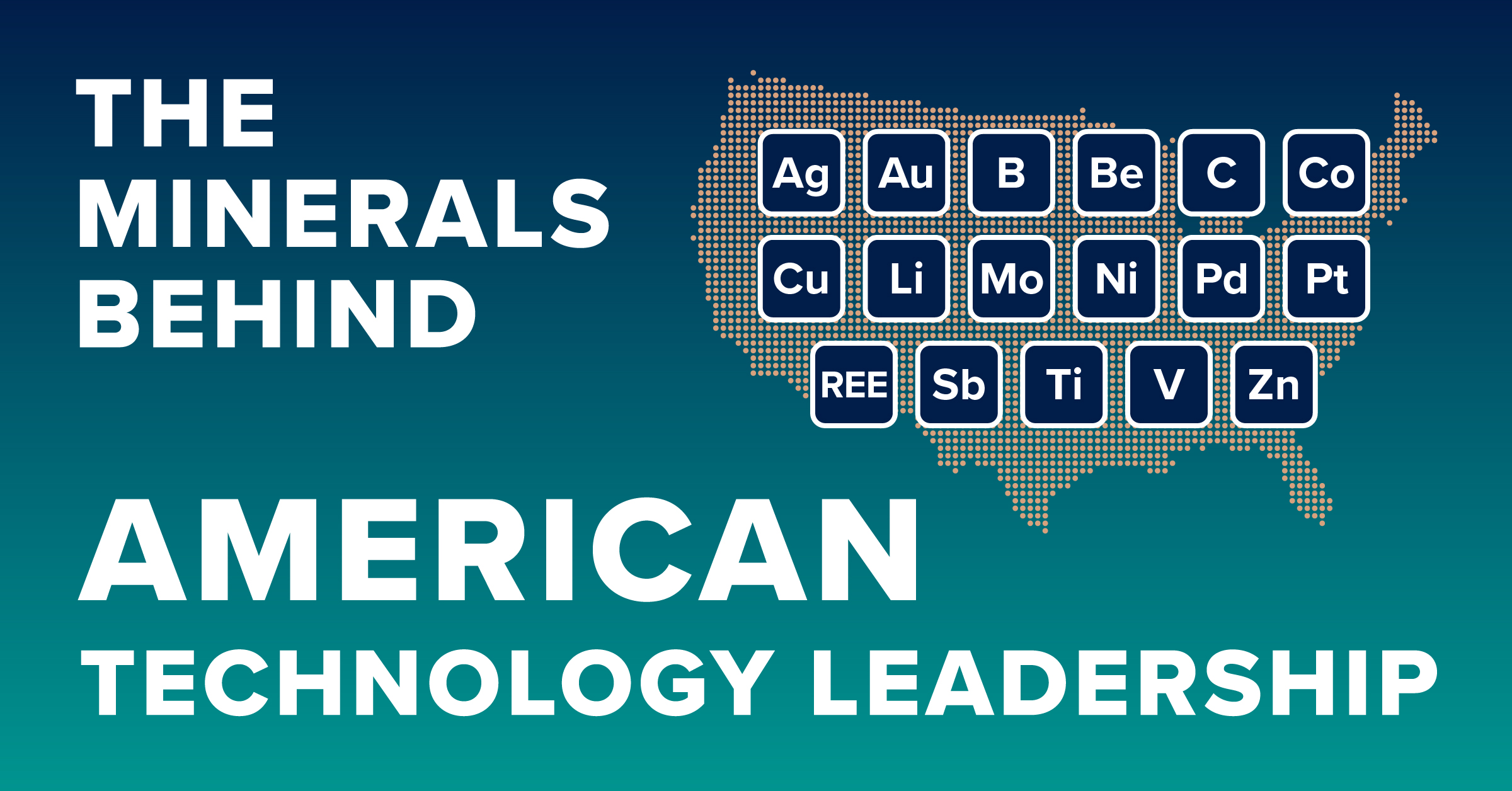
The race for technological leadership is often measured in faster computer chips or the next breakthrough coming out of a research lab. Turning those breakthroughs into economic strength requires the industrial capacity to scale these ideas into the marketplace. And that industrial capacity is built on a foundation of readily available mined minerals.
The recent meeting between President Trump and Chinese President Xi Jinping highlighted America’s alarming reliance on mineral supply Chains dominated by China — dominance Beijing has weaponized.
When we consider the resources needed to support an abundant and cutting-edge future, the discussion often skews toward shortages of lithium, cobalt, graphite and rare earth minerals; supply chains all controlled by China. However, this conversation, and China’s reach, is so much larger.
Take, for example, recent studies that show the urgent need for far greater production of copper, a historically readily available resource. A study published in the August issue of Resources Policy illustrates the materials required to support advanced computing. Copper accounted for roughly 83 percent of the mineral mass in their model, with the largest share of copper demand coming from electricity transmission and distribution. No surprise, China is the leading source of the world’s copper stores.
According to the International Energy Agency, China held half of global copper smelting capacity in 2025. That gives it a major role in converting mined resources into the materials needed for electrical infrastructure and advanced manufacturing. These are also materials American factories and utilities need to modernize their operations. Securing their supply strengthens the broader economy, whatever course the debate over supercomputing and AI takes.
For the United States, building that productive capacity is an opportunity to connect more of our mineral resources to our industrial growth. New mines, expanded processing and improved recovery of minerals from existing operations can give manufacturers more options for sourcing the materials they need. A technology strategy that encourages new factories should also support the American producers that can supply them.
Americans Want Secure Mineral Supply Chains
Americans strongly support action to reshore mineral production and break China’s mineral stranglehold. In a September Harris Poll commissioned by the National Mining Association, 85 percent said increasing domestic mining is important to U.S. economic and national security in light of China’s restrictions on exports of key minerals.
This support extends to federal investment. Sixty-two percent favor federal funding for major domestic mineral projects to help reduce reliance on China for materials needed by manufacturing and defense supply chains. These findings provide policymakers a clear basis for advancing responsible projects that strengthen domestic production.
Washington should act on that support by making mining and processing projects more predictable to develop and more attractive to private capital. Clear permitting schedules and better coordination among reviewing agencies can help. Regulatory certainty gives companies the confidence to make investments that must serve American industry for decades.
The entire ecosystem of federal mining policy, from permitting to targeted investment, should move in lockstep with the ongoing effort to pursue technological leadership. And what is clear is that this era of supercomputing, connectivity and data is going to be the most minerals and materials intensive yet. Our goal should be a domestic supply chain that can meet the needs of established industries and respond as new technologies change demand.
The stakes of this competition will be measured in where new industries take root and which countries supply them. America has every reason to pursue leadership in both. Giving American mining and processing the opportunity to grow is essential to turning our technological ambitions into lasting industrial strength.